 |
Delhi Airport |
Introduction
This was the beginning of the long hard journey. I took
the Japan Airline flight (JL719) departing at 11:20 AM
on October 02 Saturday, 2004 to Singapore. The departure
was delayed by 20 minutes. After spending 1 hour and 15
minutes in the transit lounge within Changi International
Airport in Singapore, I took the Singapore Airline flight
(SQ408) to Delhi International Airport, India. I could
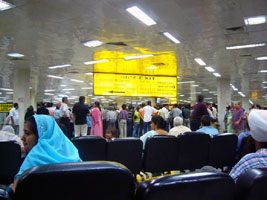
reach Delhi at 9:40 PM. Although that day was one of the
national holidays in India, the arrival lobby was crowded
. The famous leader of India, Mahatma Gandhi was born
October 02, 1869. Since there is 3 and half hours time
difference between Japan and India, it was 0.10 AM in
Japanese Standard Time. It was heavily raining with thunder
lightening in Delhi. Temperature was less than 30 Celsius.
Because of this bad weather, the roads in the city were
covered by deep water in many areas. Thus, traffic was
so bad that I could reach the hotel “Crown Plaza Delhi”
at 11:30 PM (3:00 AM in Japan Time). Just 20 hours were
necessary from my hone to the hotel.
Delhi is the capital of India. Its population is as much
as almost 100 million.
It was amazing for me that Internet connection was so
difficult in my room in such a famous country of India
for Information Technology. I spent almost 1 hour to retrieve
and send e-mails from my room by using a dial-up network.
October 03 Sunday, 2004
After taking short sleep, I was waked up the double morning
calls at 3:45 AM, and then left the hotel at 4:15 AM for
the airport. I took the Indian Airline flight of IC896
for Jaipur departing at 6:05 AM. After 40 minutes' flight,
I arrived at Jaipur International Airport. First, we moved
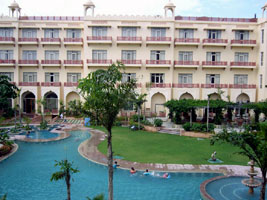
to a beautiful hotel, Le Meridian Hotel Jaipur to have
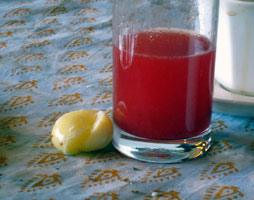
a breakfast. I found that the color of chicken egg yolk
was fainter in India than that in Japan. After finishing
the breakfast, we moved to Santokba Durlabhji Memorial
Hospital (SDMH) by crossing the city.
|
|
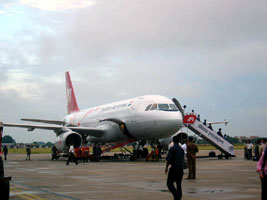
Indian Airline
Airplane |
Jaipur Airport |
|
|
Le Meridian
Hotel |
Egg Yolk and
Watermelon Juice |
The Pink City
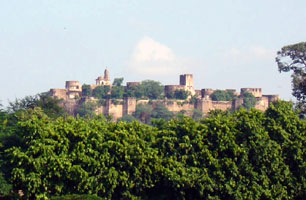
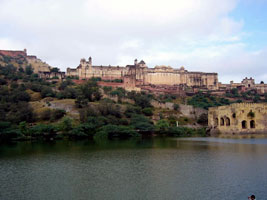
Jaipur is a beautiful city and located 250 Km far from
and south-west to Delhi. Royal families used to live there.
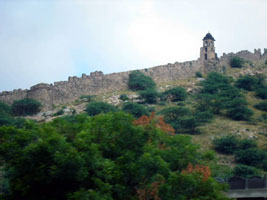
The city is surrounded by mountains. The ridges of those
mountains have the long wall similar to the Great Wall
in China as well as many Forts. Many Forts are now changed
to Hindu temples. They were mainly constructed 300 years
ago to protect from the invasion by the foreign troops.
However, Amber Fort was constructed in the 7th Century.
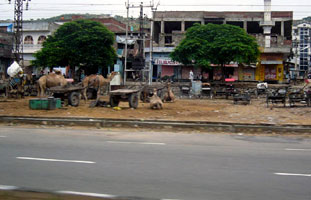
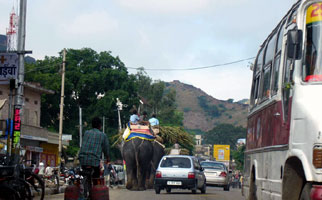
On the streets, we can see not only cows or dogs but also
camels, elephants or monkeys. The elephants are working
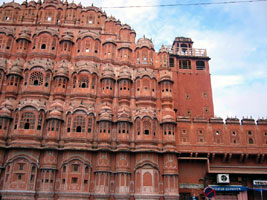
to carry heavy things. Jaipur is also called “The Pink
City”. When the city was built in 1727 A.D. by King by
Maharaja Sawai Jai Singh II, all of the buildings were
constructed by using pink stones. Even now in the central
area of the city, only pink color is allowed to paint
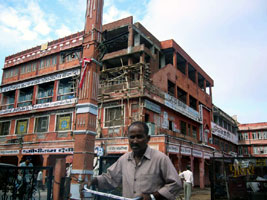
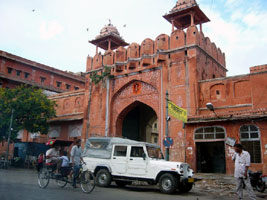
the outside of the buildings. City Hall as well as the
entrance gate of City Palace is painted to pink color.
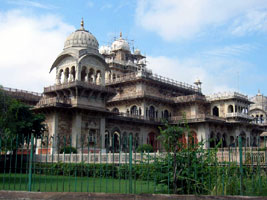
There are many beautiful buildings. City Museum is a whitely
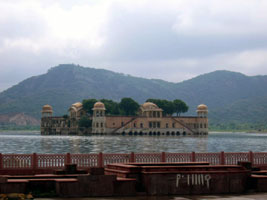
painted beautiful building. The city has a wide lake,
and an old Palace is built in the center of this lake.
|
|
Amber Fort |
Camel |
|
|
Elephant |
Pink City |
|
|
City Hall |
City Palace |
|
|
Museum |
Lake Palace |
PCI in SDM Hospital
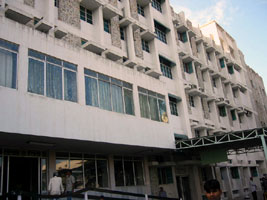
SDMH is a private hospital. It has several separated
buildings. The Cardiology department is belonging to the
emergency building. They have a young but good surgeon,
who is doing 25 cardiac surgeries every month. The 90%
of surgical cases are CABG. Off-pump CABG is quite popular
in India, since it can improve the patients' outcomes
and save the surgical cost. Off-pump CABG is performed
in 80% of cases also in SDMH.
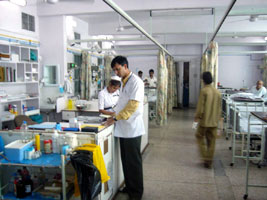
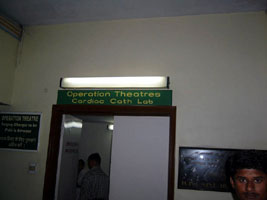
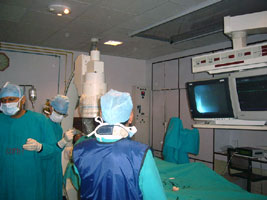
I arrived at the catheter laboratory by 9:30 AM. The
laboratory was equipped with a single-plane Siemens' digitalized
machine. They were preparing 6 cases for me.
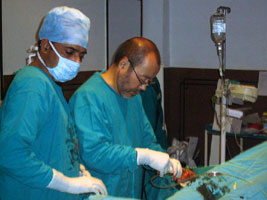
The 1st case was a 40-years old medical doctor working
in the same hospital. He presented with chest pain. His
EKG was normal. He refused to have a treadmill test. He
wanted to have diagnostic coronary angiography and, if
possible, ad-hoc coronary angioplasty through the radial
approach. When I came in the catheter laboratory, the
patient already lay down on the table. The patient seemed
very strained. The radial artery pulse was already weak.
However, I was lucky to hit the radial artery and had
a successful cannulation. I started coronary angiograms
by using a 5 French JL 3.5 catheter. The left coronary
artery originated too higher to be engaged by this catheter.
I decided to exchange it to AL-2 catheter. However, the
catheter exchange was failed due to the severe brachial
artery spasm above the elbow joint. I abandoned the transradial
approach and switched to the transfemoral approach. The
patient had triple vessel disease. He will have elective
PCI later. I have never experienced such strong spasm
of the brachial artery, which might be induced by his
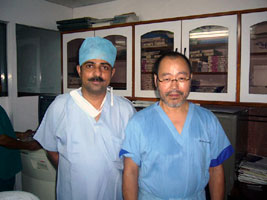
high strain. For this case, Dr. Sharma assisted me. We
met each other 2 years ago in Amsterdam, when I was invited
to Kimney Course as an operator by Dr. Ferdinand Kiemeneij
and he joined the meeting. He was born in Jaipur and graduated
the medical school in Mumbai. After he was trained as
an Interventional Cardiologists under Dr. Samuel Mathew,
he spent 2 years in Institut
Cardiovasculaire Paris Sud as a fellow for Interventional
Cardiology under Drs. Marie Claude Morice and Yves Louvard,
where he learnt TRI.
The next patient had severe narrowings in LAD and RCA.
I put a Cypher stent in the LAD lesion by using a 6 French
EBU 3.5 guiding catheter through the right transradial
approach, and placed a Vision stent in the RCA lesion.
|
Thinking |
|
Rambagh Palace
Taj Hotel |
The 3rd case had previous inferior myocardial infarction
and coronary angiogram taken 1 month before showed a chronic
total occlusion of the proximal right coronary artery.
I again used the right radial approach by using a 6 French
JR 4.0 guiding catheter. Since they had only Cross-it
XT 100 and 200 guidewires for CTO lesions, I chose a Cross-it
200 guidewire. The guidewire advanced into the distal
true lumen. After the predilatation, I placed a 18 mm
Vision stent.
During the lunch time, we had a round table lecture and
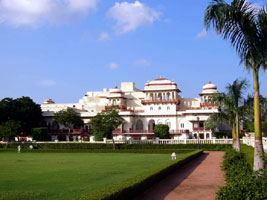
discussion in the beautiful hotel, Rambagh Palace Taj
Hotel. This hotel used to be a real royal palace. Almost
30 local Cardiology doctors came to the meeting. I did
a lecture about the basics of TRI for 45 minutes by using
my laptop computer. After having a late lunch, I came
back again to the hospital and did several more cases.
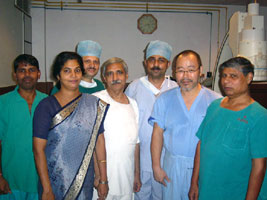
I discussed much with Dr. Parashar, who is a famous anesthesiologist
and has been to Tokyo in early September this year to
attend the International Congress of Anesthesiology as
an invited guest speaker.
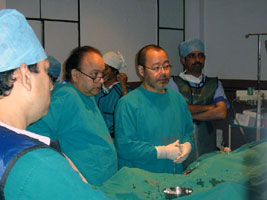
Everybody in the catheter laboratory was so kind that
I could do my best. Although they do not have any scheduled
works in the catheter laboratories on Sunday in India,
all of them prepared themselves for this Sunday's live
demonstration by me. I am deeply appreciating it. I left
the hospital and moved quickly to the Airport to take
IC895 flight to Delhi departing at 6:00 PM.
|
|
Dr VK Parashar
(center) |
Cathlabo Members |
The price of stents in India
Total number of PCI procedures in India is 40,000 cases
last year, and it is increasing by 25% every year. Although
patients must pay for stents by themselves, the penetration
rate of DES in India is almost 55%. The most popular DES
is Cypher. TAXUS almost disappeared from India, because
it had recall in the US, and because the sales architecture
in India was almost crashed. The 2nd an 3rd most popular
DESs are Indian-made DESs. I was surprised to know the
price of Cypher was much more expensive in India than
Japan. It is almost 4,500 US$ in India. Maybe, it is the
most expensive price in the world. The price of BMS is
1,000 US$. Also, the price of a PercuSurge system is surprisingly
high and 1,600 US$.
インド訪問記
III-1 湘南鎌倉総合病院
心臓センター循環器科 齋藤 滋
|
Delhi Airport |
はじめに
これが長くてハードな旅の始まりでした。2004年10月2日午前11時20分初のJAL 719便に搭乗してシンガポールに向かいました。出発は20分遅れました。シンガポール・チャンギ国際空港のトランジット・ラウンジで1時間15分過ごした後、シンガポール航空SQ408便に乗り換え、インドのデリー国際空港に向かいました。デリーに到着したのは午後9時40分でした。その日はインドの休日でしたが到着ロビーは混雑していました。インド建国の父、マハトマ・ガンジーは1869年10月2日に生まれました。日本とインドの間には3時間半の時差がありますので、既に日本時間の午前0時10分でした。デリーは大雨で、稲妻が光っていました。気温は30度ありませんでした。天気が悪いため、街中の道はそこかしこで冠水していました。このため、交通は渋滞し、デリー・クラウン・プラザ・ホテルに到着したのは午後11時30分(日本時間午前3時)でした。つまり、自宅からホテルに到着するのに丁度20時間かかったことになります。
デリー(ニューデリー)はインドの首都で人口がなんと1億人もいます。インドはITで有名ですが、私の部屋からインターネットに接続するのがとても大変だったのには驚きです。ダイアル・アップ接続を使ってメール送受信を終えるのに大方1時間もかかってしまいました。
2004年10月03日 日曜日
短い睡眠の後、午前3時45分に二重のモーニング・コールで起床しました。そして午前4時15分に空港に向かいました。そこで6時5分発のJaipur行きIndian
Airline IC896便に乗りました。40分のフライトの後、Jaipur国際空港に到着しました。まず、とても綺麗なメリディアン・ホテルに向かい朝食をとりました。インドでは卵の黄身の色が日本よりも薄いことを発見しました。朝食を終えてからSantokba
Durlabhji 記念病院(SDMH)に町を横切って移動しました。
|
|
Indian Airline
Airplane |
Jaipur Airport |
|
|
Le Meridian
Hotel |
Egg Yolk and
Watermelon Juice |
ピンク色の都市
Jaipurは美しい街です。デリーから南西に250Kmの所に位置します。かつて王族が住んでいました。街は山々に囲まれています。そして、その山の稜線にはずっと壁や要塞が造られており、まるで中国の万里の長城のようです。要塞の多くは現在ではヒンズー教寺院となっています。これらの多くは300年前に外国の軍隊から守るために造られました。しかし、Amber要塞だけはとても古く、7世紀に造られたものだそうです。町並みには牛や犬だけでなく、像やラクダ、そして猿などもいます。象は重い荷物を運ぶために使われています。Jaipurはまたの名を“The
Pink City”とも呼ばれます。Singh II王様が1727年にこの街を造った時にピンク色の石のみを用いて建物を建てたのです。現在でも街の中心部ではピンク色しか建物の外側には用いてはいけません。市民会館も市の中の王宮もピンク色です。市立博物館は白ですが、とても綺麗な建物です。街には大きな湖がありますが、中心部には古い王宮が建てられています。
|
|
Amber Fort |
Camel |
|
|
Elephant |
Pink City |
|
|
City Hall |
City Palace |
|
|
Museum |
Lake Palace |
SDM病院でのPCI
SDMHは私立病院です。いくつかの建物がありますが、循環器科があるのは救急病棟です。この病院にはまだ若いですが腕の良い心臓外科医がいます。彼は毎月25例程度の開心術を行い、その90%が冠動脈バイパス手術だそうです。患者さんの長期的経過が良いことや、経済的にも有利なためOff-pump(人工心肺を用いない)冠動脈バイパス手術がインドではとても流行っていますがねこのSDM病院でも80%の症例はOff-pumpだそうです。
カテラボには午前9時半に到着しました。カテラボにはシーメンスのシングル・プレーンのデジタル・マシンがありました。彼らは私のために6例準備していました。
第一例目は40歳の男性で、この病院で働く医師でした。胸痛がありますが、心電図は正常でした。トレッドミル検査を受けるのは嫌だと言ったそうです。彼は、橈骨動脈からの診断カテーテルと可能であれば、そのままPCIをすることを望みました。私がカテ室に入った時には、患者さんは既にカテ台に横たわっていました。患者さんはとても緊張しているように見えました。橈骨動脈拍動は既に大分と弱くなっていました。しかし、幸運にも橈骨動脈にシースを挿入することが出来ました。5FのJL
3.5を用いて冠動脈造影を開始したのですが、左冠動脈は非常に高い位置から出ていましたので、このカテーテルではうまく入れることができなかったので、AL-2に交換しようとしました。しかし、肘関節の上で上腕動脈がひどいスパスムを起こしたために交換することができませんでした。このため、大腿動脈穿刺に切り替えました。この患者さんは結局3枝病変であり、後日PCIということになりました。この症例の助手はSharma先生が務めて下さいました。彼とは2年前のKimney
Courseで会ったことがあります。その時、僕は術者としてFerdinand Kiemeneij先生に呼ばれ、彼はそのコースに参加するために来ていました。彼はJaipurで生まれ、Mumbaiの大学を卒業したあと、Samuel
Mathew先生の下で循環器医師のトレーニングを受け、それからパリ南心臓血管研究所においてMorice先生やLouvard先生の下でPCIのフェローを2年間行い、そこでTRIを学びました。
次の患者さんはLADとRCAにきつい狭窄がありました。私は右橈骨動脈アプローチで、LADに対して6F EBU
3.5を用いてCypherステントを植え込み、RCA病変に対してはVisionステントを植えました。
|
Thinking |
|
Rambagh Palace
Taj Hotel |
三例目の患者さんは以前に下壁梗塞を起こした患者さんで一ヶ月前の造影でRCA近位部にCTO病変があることが分かっていました。この症例に対しても6F
右TRIでJR 4.0を用いて入りました。カテ室にはCTO用のガイドワイヤーとしてはCross-it 100と200しかありませんでしたので、Cross-it
200を用いました。ガイドワイヤーはCTO末梢の真腔に入りました。前拡張をしてから、18mmのVisionステントを植え込みました。
昼食時間には、とても綺麗なTajホテルでの講演を行いました。このホテルはかつて本当の王宮だったのです。この地域の30名ぐらいの循環器医師が集まりました。私はTRIの基礎に関する45分間の講演を私のラップトップを用いて行いました。私はParashar先生と色々なことを話しました。彼は有名な麻酔科医師であり、先日9月初めも国際麻酔学会に招聘されて東京に行ってこられたところでした。
カテラボの皆はとても親切でしたので私は最善を尽くすことができました。通常インドでは日曜日には予定的PCIは行われません。しかし彼らは私のライブデモンストレーションのために色々と日曜日にもかかわらず準備しました。このことに私はとても感謝しています。病院を出て、午後6時発のデリー行きIC895便に乗るために空港に急ぎました。
|
|
Dr VK Parashar
(center) |
Cathlabo Members |
インドでのステントの価格
インドでは昨年PCI症例数が4万例だったそうです。しかも、毎年25%ずつ増加しているそうです。患者さんはステントについては自分で支払う必要がありますが、それでもDESの使用率は55%程度になるそうです。最も良く使われているDESはCypherです。TAXUSはインドからほぼ完全に消えてしまったそうです。その理由は米国でのリコール事件と、インド国内での販売体制の崩壊のためだそうです。二番目、三番目に使われているDESはインド国産のものだそうです。Cypherの値段を聞いて驚きました。何と、4,500ドルもするのです。きっと世界で一番高いと思います。これに対してBMSの値段は1,000ドルだそうです。また、PercuSurgeも高く、1,600ドルだそうです。 |