Visiting USA-XXIIShigeru Saito, MD, FACC, FSCAI, FJCC
|
|
|
|
After finishing the wonderful dinner, Dr. Kandzari took us to the hotel by driving his own car. He proposed us to pick up from the hotel at 9:00 AM next morning. I wondered why I had to go to the hospital so early, because my live transmission was supposed to begin from 2:20 PM. I was thinking about the case. I planned the strategy. Finally, I concluded that: I would do what I could do for the particular patient. I would not be able to do anything, which I could not do. Any result would be the true my ability. I accept any result.
February 6th Friday, 2009
I woke up at 8:00 AM and took shower. While taking breakfast, I suddenly realized that the time in the schedule was on the East Coast Time, which was 3 hours faster than the West Coast Time. Thus, 9:00 AM is equal to 12:00 noon in New York.
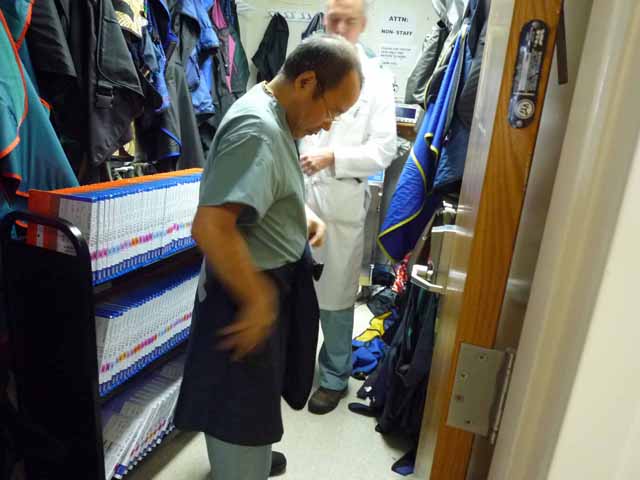
While waiting for the patients coming in the catheterization laboratories, I was not so strained. Dr. Kandzari took one blue X-ray protector for me. It was the protector of Dr. Richard Schatz. I was glad to wear it. The patient came in the laboratory at 10:15. I asked a young fellow doctor to take both side femoral arteries using two 8 French metal sheaths. I stated the case from 10:45 AM (= 13:45 EST).
I put a 7 French 85-CM AL1.0SH guiding catheter from the right groin and a 8 French 85-CM XB 3.5SH guiding catheter from the left groin. Even by the simultaneous bilateral injection, the septal route was not clear. However, I decided to start from the retrograde approach. Introducing a Finecross microcatheter into the posterior descending artery by a Runthrough guidewire, I exchanged the guidewire to a Fielder-FC and tried to find septal connections. By applying fine and subtle torque control on the tip of the wire, the wire finally could be successfully advanced into LAD. The Fielder-FC guidewire passed into the occluded previous stent and went into a septal branch dividing from the middle part of the stent. I extended the guidewire, and took a Channel Dilator, which is made by ASAHI Intecc and approved for clinical use by US FDA just 2 days ago. The Channel Dilator easily crossed the invisible septal route. While putting the tip of the Dilator within the previous stent, I exchanged the wire to a Miracle 3. The miracle 3 guidewire crossed the stent but went into the subintimal dissection. I could achieve all of these procedures before 2:20 PM transmission time.
|
|
|
|
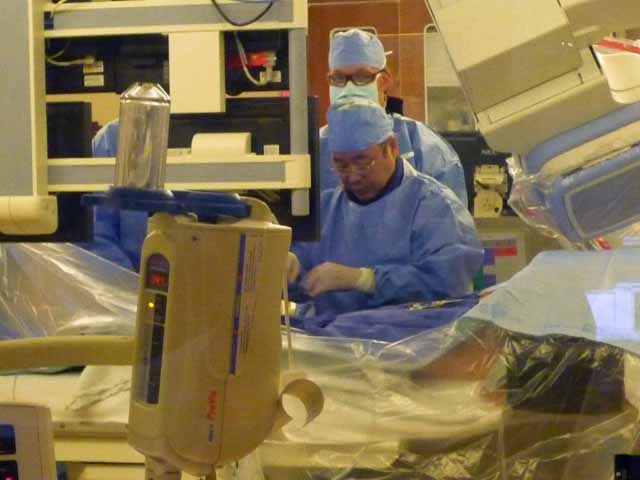
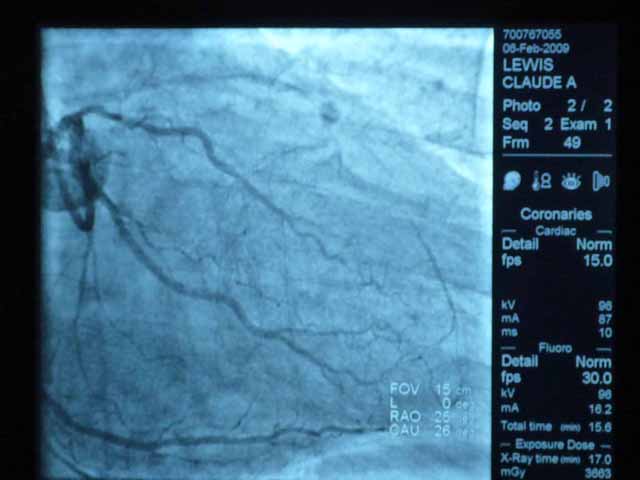
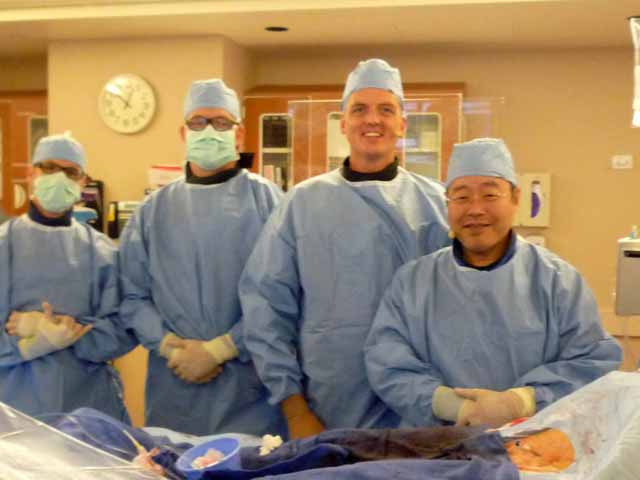
Dr. Kandzari was assisting me. During the transmission, he introduced what I had done. I exchanged the wire to a Conquest-Pro. However, I felt it was easily going out of the stent. Then, I took a Miracle 6 guidewire. Finally, I could cross the M-6 guidewire retrogradely from RCA, septal channel, LAD and the previous occluded stent to the left main artery. I first tried to put the retrograde guidewire into the antegrade guiding catheter but failed. I took an Apex 1.5mm-OTW balloon and dilated the occluded segment. Finally, I could cross a floppy guidewire into LAD antegradely. After achieving antegrade flow, I put floppy guidewires into the 1st diagonal, high lateral and main circumflex arteries. After putting a PROMUS DES 2.5 x 18mm and a PROMUS DES 3.0 x 18mm, I did kissing balloon dilatations. Final IVUS image was great. All of us were quite happy for the result. During my transmission, Dr. Teirstein was chairing the session, and Dr. Ikari was one of the moderators. I was happy to hear Dr. Ikari’s voice from New York. At the end of the transmission, Dr. Teirstein told, “We set up Dr. Saito’s Catheter Laboratory!” These words were a really honorable award for me.
|
|
|
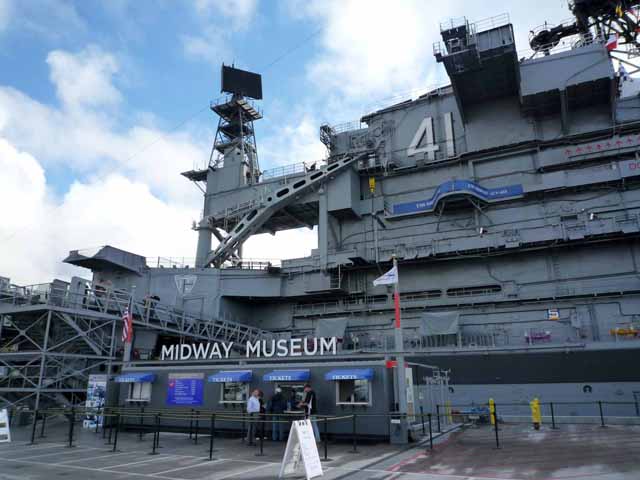
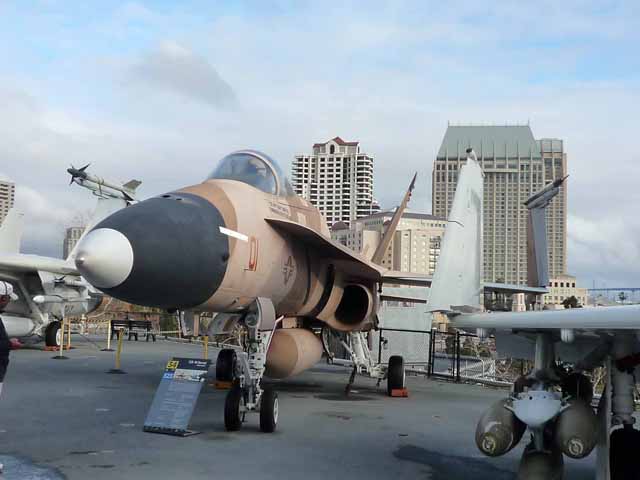
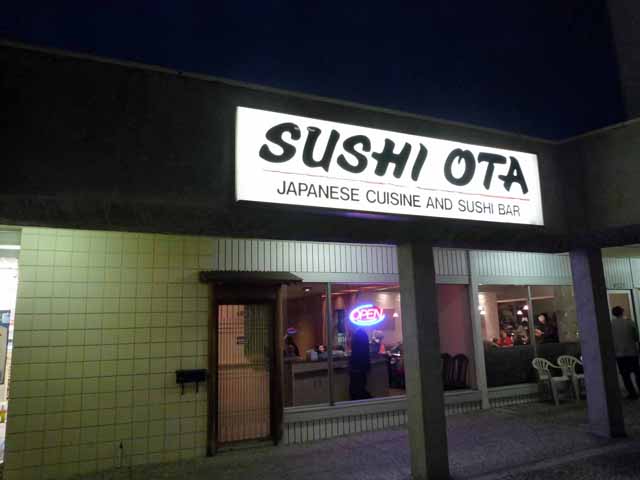
Leaving the hospital around 1:00 PM of local time, I had small lunch in the hotel. The biggest US Navy port is in San Diego. The famous air ship during the world war II, Midway, is now moored in San Diego port to serve as a museum. After visiting the museum, I bought a Nike shoes. I took nice Sushi dinner in “SUSHI OTA”. The taste there was really good.
February 7th Saturday 2009
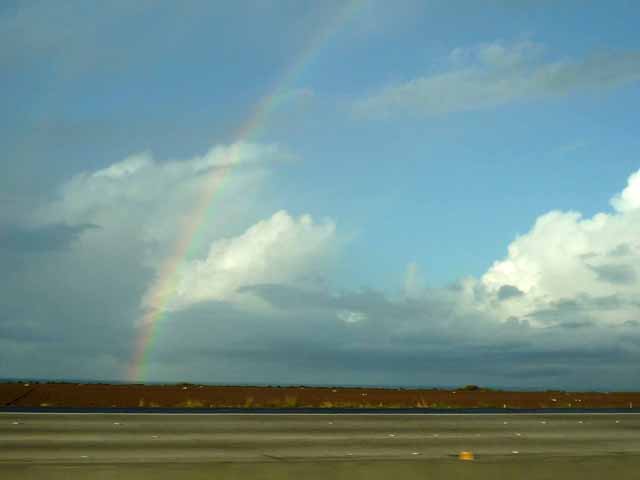
I left the hotel at 6:15 AM for San Diego Airport to take a UA 5406 flight to LA. After checking in the flight, the airline company person told us that the flight was cancelled and a bus going to LA Airport was arranged. We took one shuttle bus to the LA Airport. It took 1 hour and 50 minutes on Interstate Route 5 to LA Airport. On the way, I could see a beautiful rainbow.
|
|
|
Flying by a NH 0005 flight, I finally came back to NARITA Airport at 16:20 on February 08th Sunday 2009. This trip to La Jolla was short but really exciting.
アメリカ訪問記 - XXII
湘南鎌倉総合病院 心臓センター循環器科
齋藤 滋
CTO Summit
2009年2月5日木曜日17:05成田空港発のNH 005便でロサンゼルスに飛びました。10 時間のフライトの後、ロサンゼルス国際空港に到着し、そこで3時間トランジットして、 UA 5412便に乗り換え、サンディエゴに向かいました。サンディエゴに到着は現地時刻の 1:00 PMでした。この10年以上米国には何回も訪問していますが、過去15年間西海岸には 行ったことがありませんでした。今回サンディエゴを訪れたのは、ラホヤにある有名な Scripps Clinicを訪問するためです。ラホヤは米国の中でも最も高級地であり、サンディエ ゴから車で20分ぐらい北にあります。CTO Summitはニューヨークで開催され、過去5回 は何れもニューヨークのコロンビア大学付属病院から全てのライブが行われてきました。し かし、今年はScripps Clinicからのライブ中継もすることが決まったのです。私は、本年は Scripps Clinicからライブ中継することを指示されました。
10以上前、このScripps Clinicからステント再狭窄に対するガンマ線冠動脈内放射線治 療の有名な歴史的論文がPaul Teirstein先生の手によりいくつも報告されました。この先生 はHartzler先生の下で1985年頃冠動脈インターベンションのFellowでした。そして、現在 は、ラホヤのScripps Clinicとニューヨークのコロンビア大学と両方で働いています。現在 のScripps Clinicでの冠動脈インターベンションの部長はDavid Kandzari先生です。この宣 背は7か月前にDuke大学から移動されました。この有名なScripps Clinicでライブを行え る、ということはとても光栄なことです。
Scripps Clinicの隣のラホヤのヒルトン・ホテルにチェック・インしました。有名なゴル フ場がホテルと太平洋の間にあります。そこでは、PGAツアーのゴルフ選手権予選が行わ れていました。私は、数時間睡眠をとりました。7:30 PMに、Kandzari先生がホテルに私と Lombardi先生をピックアップして、サンディエゴ市内のとても良いシーフード・レストラ ンに連れて行って下さいました。私、Lombardi先生、そしてLow先生がScripps Clinicで の招聘術者として招かれたのです。
総勢14名でのディナーはとても良かったです。ディナーの終りに、Kandzari先生が私 に私の症例を見せて下さいました。患者さんは77歳の男性でサンディエゴ近くの市の市長 さんだそうです。Scripps ClinicにとってのVIPです。10年ぐらい前にLAD近位部に非薬剤 溶出性ステントを植えました。数か月前から狭心症が再発し、タリウム心筋シンチで広範な 前壁の虚血が認められました。2週間前にTeirstein先生が冠動脈造影を行い、左冠動脈前 下行枝が起始部から閉塞しているのが分かりました。Teirstein先生はこのLADの慢性完全 閉塞を開けようとしたのですが、順行性アプローチでの硬いガイドワイヤーやダブル・ワイ ヤーを用いてもうまくいきませんでした。ガイドワイヤーはステント・ストラットを越えて ステントの外側に行くのでした。彼はこの難しく、そしてとても大切な症例を僕に残したの です。この症例を見て、これは本当に難しい症例だと分かりました。何故ならば、左主幹部 から左冠動脈前下行枝にかけてはつるつるであり、また逆行性ルートはほとんど見えません でしたからです。
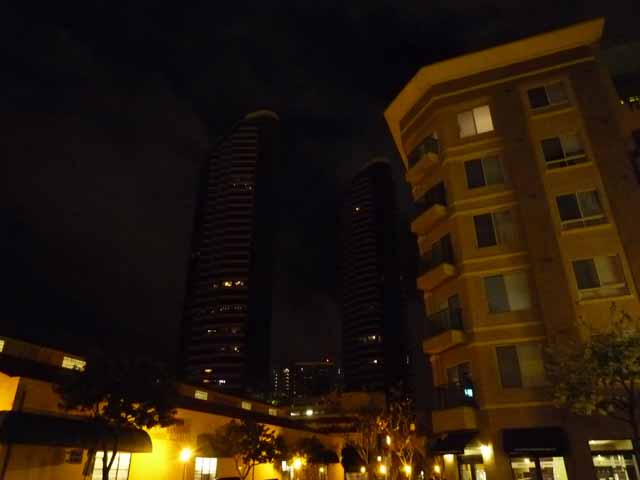
レストランの向かいには二棟並んだ高層アパートかありました。時刻は10:30 PMでし たが、窓は真っ暗でした。この高層アパートも経済危機のために空になっているのでは?と 思いました。
|
|
|
素晴らしいディナーを終え、Kandzari先生が自分の車でホテルまで送って下さいました。 そして、翌朝9:00 AMにホテルからピックアップすると言われました。僕のライブ中継は 2:20 PMから始まるのに、何で9:00 AMなんだろう? と、不思議でした。そして、どのよ うにこの症例を治療するか考えました。そして、最後に、「この患者さんに自分のできるこ とをしよう。自分の出来ないことは何もすることができない。結果がどうであれ、それが自 分の力だから、その結果を受け入れよう。」そのように考えました。
2009年2月6日金曜日
8:00 AMに起床し、シャワーを浴びました。朝食を食べながら突然ひらめきました。そ うか、あのライブ中継のスケジュールは東海岸時刻なんだ。東海岸時刻は西海岸時刻よりも 3時間進んでいるので、ここの9:00 AMはニューヨークでは昼の12:00なんだ。
カテ室で患者さんの入室を待っている間、私は緊張しませんでした。Kandzari先生が私 に青のレントゲン・プロテクターを取って下さいました。それは、あのRichard Schatz先生 のものでした。それを着てとても嬉しく思いました。患者さんは10:15 AMに入室しました。 若い助手の先生に、両側大腿動脈から8 Frの金属シースを挿入するように頼みました。そ して、10:45 AMつまり東海岸時刻13:45より私は手技を開始しました。
右の大腿動脈から7 Fr 85-CM AL1.0SHガイディング・カテーテルを、そして左大腿動 脈から8 Fr 85-CM XBガイディング・カテーテルを入れました。両側同時造影をしても、中 隔枝ルートははっきりしませんでした。それでも逆行性アプローチで開始することにしまし た。Runthroughを用いてFinecrossを#PDに導き、そこでFielder-FCに交換し、中隔枝ル ートを探しました。ガイドワイヤー先端を繊細に少しずつコントロールしました。そして、 ついに左冠動脈前下行枝に到達しました。Fielder-FCは以前植え込まれたステント閉塞部に まで到達し、そしてステント中間から出ていた中隔枝に入りました。ガイドワイヤーを延長 し、2日前アメリカFDAの承認がとれた、ASAHIのChannel Dilatorを用いました。Channel Dilatorは容易にこの見えない中隔ルートを通過しました。Dilatorの先端を以前植えられた ステントの中に置き、Miracle 3ガイドワイヤーに交換しました。Miracle 3はステント閉塞 をクロスしましたが、ステント近位部の閉塞部分で解離腔に入りました。ここまでの手技を 2:20 PMからの中継開始前に行うことができました。
|
|
|
|
Kandzari先生が私の助手をされました。中継では、私がこれまでした手技について彼が 紹介しました。私はMiracle 3からConquest-Proに交換しましたが、簡単にステントの外に 出てしまいそうだったので、Miracle 6に交換しました。そして、これによって右冠動脈か ら逆行性に中隔枝、左冠動脈前下行枝を通って以前植え込まれたステントを通過して左主幹 部に到達しました。最初、この逆行性ワイヤーを順行性ガイディング・カテーテル内に引き 込もうとしたのですが、うまくいきませんでした。そこで、Apex 1.5mm-OTWバルーンに 交換し、閉塞部を逆行性に拡張しました。最終的に、順行性に柔らかいガイドワイヤーを LAD内に通過することができました。順行性に造影され、解剖が分かるようになってから、 柔らかいガイドワイヤーをD1、HLそして回旋枝本幹にも挿入しました。PROMUS薬剤溶 出性ステント2.5 x 18mmと3.0 x 18mmを植え込んでから、KBTを行いました。最後のIVUS 像はとてもすばらしい出来でした。皆とても結果に喜びました。この中継の最中、Teirstein 先生が座長をされましたが、伊苅先生がモデレーターの一人でした。伊苅先生の声をニュー ヨークから聞けて嬉しく思いました。中継の最後に、Teirstein先生が、「今度、齋藤先生の カテ室を作るよ!」と言われました。この言葉はとても栄誉ある賞賛の言葉でした。
|
|
|
病院を出たのは1:00 PMでした。ホテルで昼食を摂りました。サンディエゴはアメリ カ海軍最大の港です。第二次大戦で有名な空母Midwayがサンディエゴ港に係留され、今は 博物館となっています。この博物館を訪れた後、Nikeの靴を買いました。夕食は「寿司 太 田」でとりましたが、おいしいものでした。
2009年2月7日土曜日
サンディエゴ空港からロス行きのUA 5406便に乗るため、6:15 AMにホテルを出発しま した。搭乗手続きを終えると、係員が、この便はキャンセルとなったので、LA空港までバ スで送る、と言われました。そこで、LA空港行きの小さなバスに乗りました。国道5号線 でLAまでは1時間50分でした。途中美しい虹を見ることができました。
|
|
|
NH 0005便で成田空港に戻ったのは2009年2月8日日曜日の16:20でした。今回のラ ホヤへの短い旅はとても刺激的でした。