Visiting Czech Republic IShigeru Saito, MD, FACC, FSCAI, FJCC
|
|
|
|
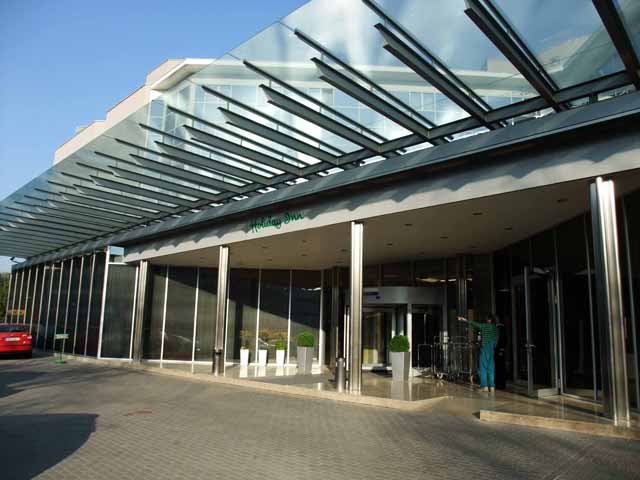
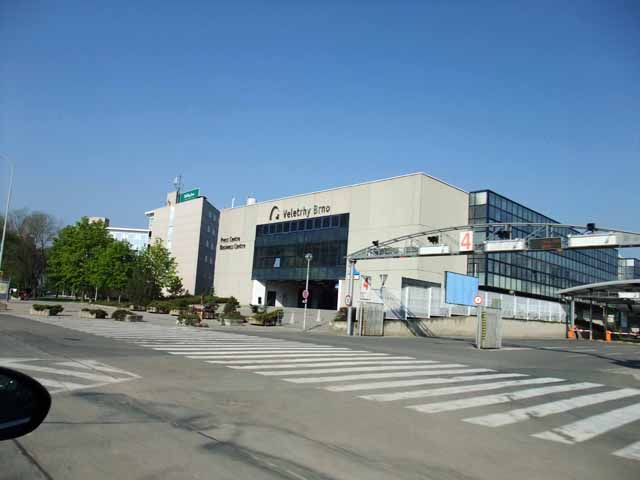
April 16th Thursday 2009
After short shallow sleep, I woke up around 5:30 AM. I did not know which case I would treat. I studied software programming on my VAIO laptop computer. At 8:00 AM, a car took me to the University Hospital Brno, which is located in the center of Brno and 5 to 10 minutes’ drive from the hotel. This hospital was established more than 100 years ago and an intimate relationship with Mayo Clinic in US. The hospital area is broad and has many separate buildings. Most of those buildings are preserved. Thus, the outside looks old but the inside is surprisingly modern.
They have 2 catheter laboratories. My working laboratory was equipped with a Philips single plane flat panel machine. Doctors in the hospital introduced me 5 possible candidates for live transmission. The target lesions of these patients were all chronic total occlusions. Because the diagnostic angiography was not perfect, I could not judge whether the retrograde approach was feasible in these patients, although they asked me to introduce it during the live transmission. We finally chose one patient. This 50 +/- male patient came to the hospital with unstable angina. The culprit lesion was in the middle RCA and was treated by placing a stent. Although he was completely asymptomatic before that heart attack, he had a CTO lesion in the middle of LAD. A septal channel collateral from RCA was supplying blood to the distal RCA and LV function was normal. The channel looked too tortuous for the retrograde access.
|
|
|
|
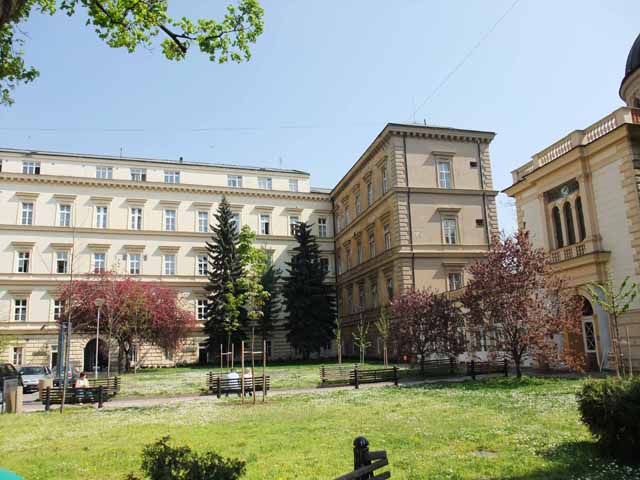
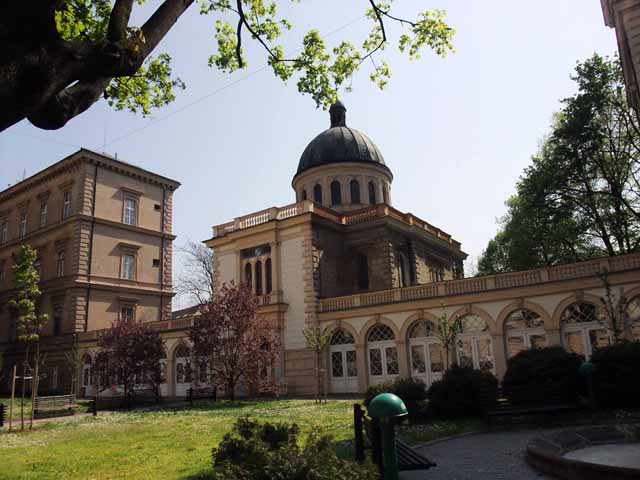
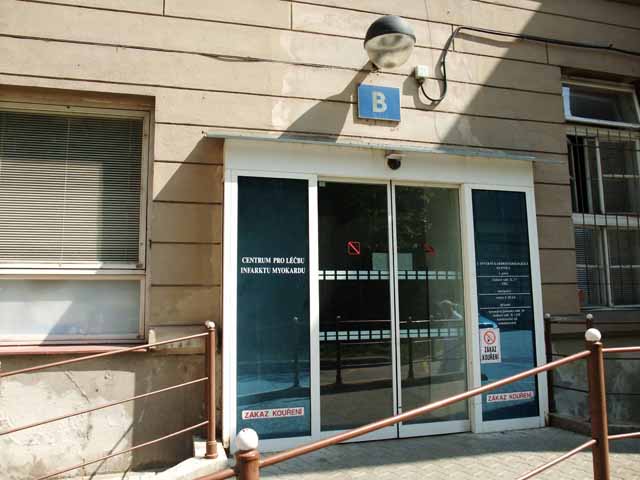
After finishing case review, I returned to the hotel and had breakfast. After spending 2 hours in my room, I check out the hotel and moved again to the hospital after 11:00 AM. Because the live transmission was scheduled between 12:30 and 13:30, we planned to start the femoral puncture around 11:30 AM. However, the laboratory was occupied by one emergency patient. Thus, we started our case around 12:00 noon.
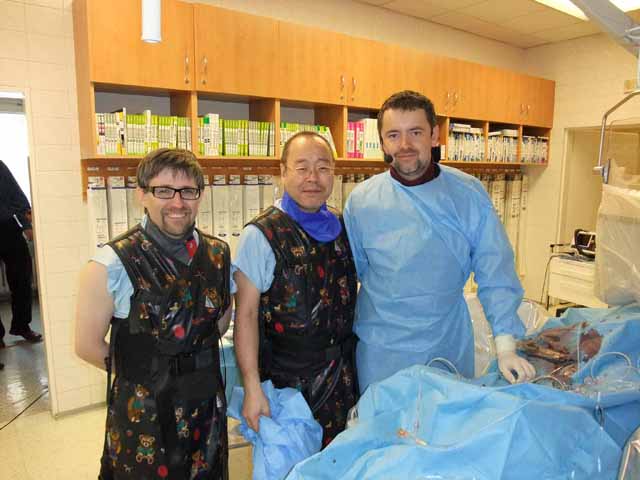
Dr. Michal Rezek was assisting me. I took bi-femoral approach using a 7 French JR4.0 and 7 French XB 3:5 guiding catheters. When I injected dye, I found another collateral connection between distal RCA and apical LAD. I started from the attempts to cross a guidewire through this collateral connection. However, it was too tortuous to cross. Then, I attempted the septal collateral. Again it was not successful. Thus, I decided to switch to the antegrade approach. While preparing that approach, the transmission was started. I explained what I had done so far. Since the antegrade approach looked too difficult, I was a little upset. I wondered how I could spend 1 hour for transmission from that time. However, my secret belief improved my psychiatric condition as usual. That belief is “I can do 100% of what I can do. However, I cannot do what I cannot do. Thus, everything I do is my real ability.”
|
|
|
|
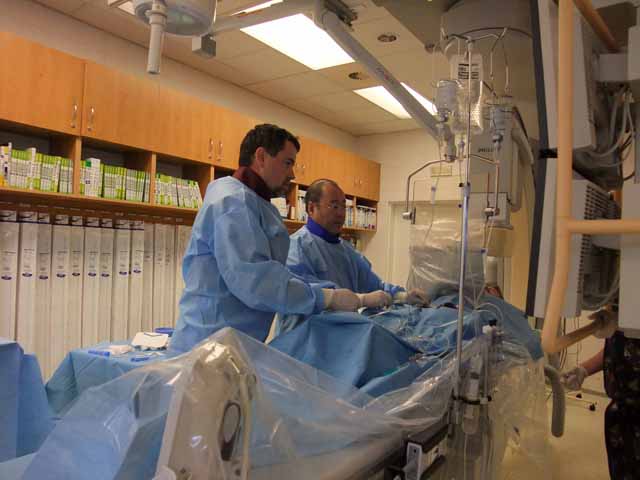
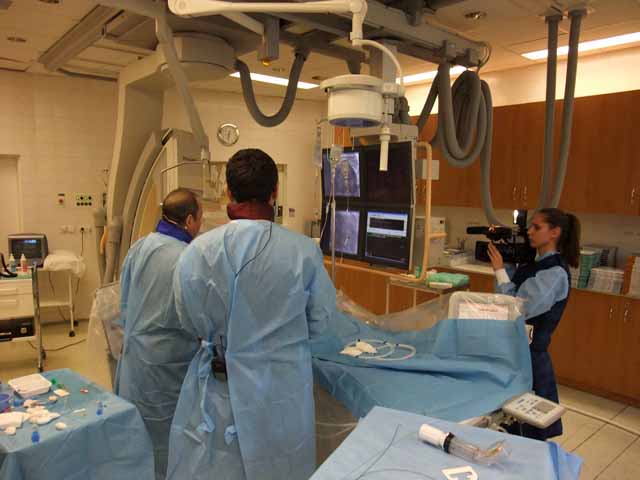
LAD was also very tortuous. The CTO was starting between big septal and diagonal branches. The entry point could not been seen. The length of the occlusion was estimated 30 mm. In reference to the distal dye filling from RCA, I tried to find the entry using a M3 guidewire. However, it was slipping in the LAD. I exchanged it to a ConP guidewire and punctured the wall of the LAD aiming at the distal dye filling. The wire was going outside the artery. While keeping the wire in that position, I did a double wire technique using another ConP guidewire. This guidewire was advancing in the LAD but in the subintimal space. After removing the 1st ConP guidewire and while keeping the 2nd wire, I did the 2nd double wire technique using a M3 guidewire. Finally, the wire was introduced into the true lumen and reached the distal LAD. A big applause was heard from the auditorium.
Because the balloon could not cross the lesion, I took a Tornus. After dilating with balloons, I placed one 2.5mm and one 3.0 mm DES in the lesion. The final result was excellent. The transmission was continued through the end of the procedure. I and everybody in the laboratory were quite happy. The procedure was something like a miracle. I finished everything at 13:40.
|
|
|
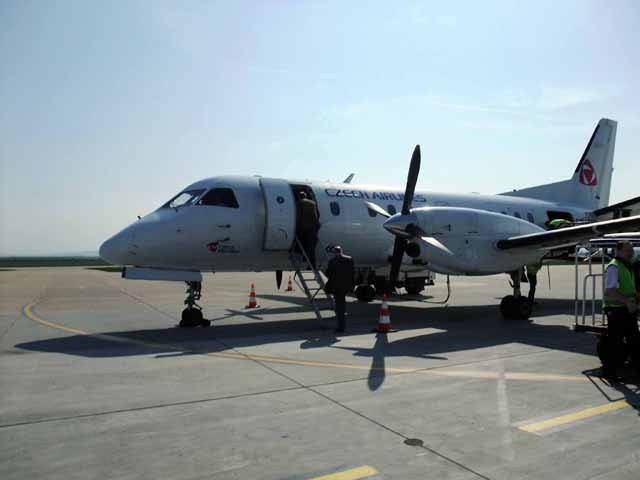
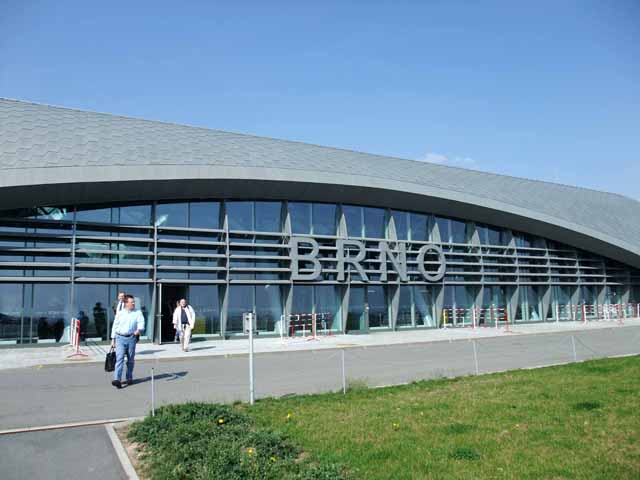
After changing clothes, I hurried to the Brno Airport to catch the OK 0033 flight for Prague departing at 15:45. At the Prague Airport, I changed my flight to OK 0762 flight for Paris CDG Airport. In the CDG Airport, I had 3 and half hours transit time. Finally, I took the AF 0278 flight departing at 23:35 from CDG Airport for Narita. I finally reached Narita Airport around 18:00 on April 17th Friday 2009. Actually my flight from CDG is the last flight of the day leaving from CDG Airport. Thus, I could finish this bullet trip to Czech Republic in 3 days while spending only 15 hours in the final destination Brno. Although I had no time to go sightseeing, I had several chances to talk about different things with Czech people. Only 20 years passed after the democratic revolution from the communistic Government in Czech. Those days, any religion was prohibited and studying Russian language was forced to all of the middle and high school students. Now, all of these compulsion disappeared. Next time, I would stay a little bit longer in this nation.
チェコ訪問記 - I
湘南鎌倉総合病院 心臓センター循環器科
齋藤 滋
チェコ共和国への弾丸ツアー
2009年4月15日水曜日の11:05 AM発のAF 02711便で成田からパリCDG空港に飛び立 ちました。この便はJALとのコード・シェア便であり、JALによって運行されていました が、座席は完全に満席で、驚きました。CDG空港手、チェコ航空のOK 4769便に乗り換え、 1時間15分の後 プラハに到着しました。この便もJALとのコード・シェア便でした。プ ラハで再び、OK 0036便に乗り換え、ブルノに向かいました。この飛行機は小さなプロペラ 機でした。ブルノはチェコ共和国第二の都市ですが、ブルノ近郊全体で人口は70万人ぐら いしかいません。ブルノのHoliday Innホテルにチェック・インしたのは11:00 PMを回っ ていました。結局、鎌倉の自宅を出てから24時間かけてホテルに入った訳です。
チェコ心臓病学会の心臓インターベンションン分科会第19回学会より唯一の外国人術 者として私は招聘され、ブルノに入りました。この学会はホテルに隣接する大きな国際会議 場で4月15日と16日の二日間に渡り開催されました。Mintz先生やVirmani先生といった アメリカの大物も講師として招聘されていました。学会長はMasaryk大学ブルノ付属病院 のPetr Kala教授でした。私にとって、チェコはこれで三回目ですが、ブルノは初めてです。 ホテルは新しくて綺麗でした。インターネットには無料で接続できました。ホテルのバーで 軽い夕食を摂ってからベッドに入りましたが、既に翌日の1:00 AMでした。
|
|
|
2009年4月16日木曜日
短い浅い睡眠の後、5:30 AMには起床しました。どんな症例をライブで治療するのか知 りませんでした。VAIOでコンピューター・プログラムの勉強をしました。8:00 AMに車で 大学病院に連れていってもらいました。病院はブルノ市中心に位置し、ホテルからは車で5 分から10分の距離でした。病院は100年以上前に設立されたもので、アメリカのMayo Clinic とも緊密な関係にあるそうです。病院の敷地は広く、その中に独立した建物がたくさんあり ます。これらの建物の多くは保存されています。このため、病院の外観は古いのですが、中 は驚くほどモダンです。
カテ室は二つでした。私がライブをするカテ室にはPhilipsのflat panelのsingle plane が据え付けてありました。病院のお医者さんはライブ候補の5例のプレゼンを見せてくれま した。5例とも慢性完全閉塞でした。彼らの要請はライブでレトロを見せて欲しい、という ものでしたが、残念ながら診断カテが不十分で可能かどうかの判断ができませんでした。最 終的に一例の患者さんを選択しました。患者さんは50歳くらいの男性で、不安定狭心症で 来られました。責任病変は右冠動脈の中部で、そこは既にステントで治療されていました。 左冠動脈前下行枝の中部はCTOでありましたが、今回の不安定狭心症までは全く症状は無 く、また左室造影も正常でした。右冠動脈から中隔枝を介した副血行が見えましたが、とて も蛇行しているようで、レトロは困難に思えました。
|
|
|
|
症例を見てから、再びホテルに戻り、朝食を取りました。部屋で2時間過ごしてから、 ホテルをチェック・アウトして、11:00 AM過ぎに再び病院に戻りました。ライブ中継は12:30 から13:30の一時間の予定でしたので、11:30 AMには大腿動脈穿刺を開始する予定でしたが、 あいにく急患が未だカテ室を占有していましたので、昼の12:00から開始しました。
Michal Rezek先生が私の助手を務めて下さいました。両側大腿動脈穿刺で、7FrのJR4.0 とXB3.5ガイディング・カテーテルを挿入しました。造影すると、右冠動脈末梢からLAD 心尖部への副血行が見えましたので、まずはそのルートを探りましたが、蛇行がひどくダメ でした。このため、中隔枝経由を狙いましたが、これもうまくいきませんでした。そこで、 順行性アプローチをすることにしました。これにとりかかっている時に、中継がスタートし ましたので、今まで何をしたかを説明しました。順行性アプローチはとても難しそうに思え ましたので、少し動揺していました。どうやってこれから一時間の中継をこなしていけば良 いのか? そんなことも考えました。でも、僕の秘密の信念で何時ものように気持ちを落ち 着かせました。それは、「僕は自分ができることは100%できる。でも、自分ができないこと は出来ない。だから、どんなことでもそれは自分の実力だ。」というものです。
|
|
|
|
LADも非常に蛇行していました。CTOは大きな中隔枝を出した後、対角枝との間から 始まっていました。エントリーは全く不明でした。閉塞長は30mmぐらい。右冠動脈から の造影を頼りに、まずはMiracle3で探りましたが、ツルツルに滑るのみでした。そこで、 Conquest-Proに交換し、右冠動脈からの造影を狙って、LADの血管壁を突き刺しました。 このワイヤーは血管の外にでましたが、それをそのままにして、二本目のConquest-Proを 用いてdouble wireを行いました。今度はLADの中を進みましたが、サブインティでした。 最初のConquest-Proを抜去し、二本目をそこにおいたまま、最初のMiracle3で二回目の double wireを行いました。これによりワイヤーは真腔を捉えることができ、LAD末梢まで 進みました。会場からは大きな拍手が沸き上がりました。
バルーンは通過しませんでしたので、Tornusを用い、その後バルーンで拡張し、2.5mm と3.0mmのDESを植え込みました。最終結果はとても良いものでした。中継は手技が終了 するまで続けられました。私もカテ室の皆も喜びました。この手技は何と言うか奇跡に近い ものです。私は手技を13:40に終えました。
|
|
|
服を着替え、プラハ行き15:45発のOK 0033便に乗るためブルノ空港に急ぎました。プ ラハでパリCDG空港行きのOK 0762便に乗り換え、CDG空港で3時間半の待ちの後で、 23:35発のAF 0278便に乗り、成田に戻りました。成田到着は翌日2009年4月17日金曜日 18:00頃でした。この便がCDG発の最終便でした。結局、最終目的地ブルノで15時間を過 ごし、合計3日間というチェコ弾丸ツアーでした。観光に行く時間は全くありませんでした が、チェコの人々と話す機会がありました。ほんの20年前の民主革命までは、チェコは共 産主義政権の国でした。当時は、いかなる宗教も禁止され、中学生や高校生はロシア語を学 ぶことを強制されました。今ではこのような強制は一切無くなりました。次回はもう少しゆ っくりとこの国を訪問したいものです。