Introduction
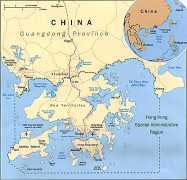 Hong Kong Map
 |
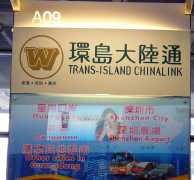 Chinalink
 |
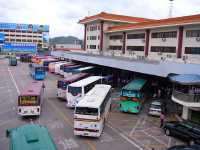 Shenzhen Bus Terminal
 |
On July 12 Monday, 2004, I flied to Hong Kong
International Airport by taking the JL731 flight departing at
09:50 AM from Narita to visit Shenzhen City of China. It was more
than 20 years ago, actually in 1979, when Chinese Government decided
to open Shenzhen area for the investment by foreign capitals as
one of the special economical areas as well as Zhuhai, Xiamen
and Shantou. Before that, the population around Shenzhen was less
than 30,000, although it is more than 7 million now. Shenzhen
is next to Hong Kong. Between these 2 cities, there is a small
river. The border between China and English-territory, Hong Kong
has been the most secure national border for many years. Hong
Kong was returned to China on July 1, 1997 from England. However,
there is still a border between China and Hong Kong.

Shenzhen Skyscrapers at Night |
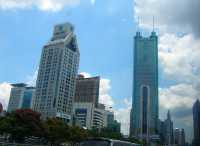
Shenzhen Skyscrapers in the Daytime |
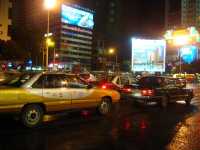
Traffic Jam in Shenzhen |
Now, Shenzhen is the 2nd biggest city in GuangDongProvince, whose
capital city is GuangZhou. Many foreign big companies are now
in these areas. This was my 3rd trip to Shenzhen. For the 1st
time, I moved from Hong Kong by train. At that time (it was maybe
in 1999 or sometime), there was a long queue at the immigration
gate from Hong Kong to China. For the 2nd time, I moved from Macau
to Shekou by boat, from where it was just 15 minutes by car to
Shenzhen. In Chinese both Shenzhen and Shekou are made from 2
Chinese characters. “Shen” means “Deep”. “Zhen” is made of 2 pars:
the left part means “Mud” and the right does “River”. Thus, “Shenzhen”
means “DeepMuddyRiver”. “She” means “Snake” and “Kou” does “Mouth”.
Thus, “Shekou” means “Snake Mouth”.
This time I took a bus directly from Hong KongInternationalAirport
to Shenzhen. The name of this bus company is “Trans-Island Chinalink”
. This is the mostconvenient way to move to Shenzhen from the
airport, although many people take train from the center of Hong
Kong. Very few people, who know much about Shenzhen and Hong Kong,
can take this bus. The bus charge is only 150 Hong Kong dollars,
which is about 18 US dollars. The bus was a micro bus. One Taiwanese,
2 Japanese and 1 Korean moved together with me. The passage through
the border gate was very smooth, and it took only 30 minutes to
Shenzhen bus terminal .
Shenzhen is a big city. There are many skyscrapers
. The streets in the city are relatively wide, although it is
not enough for the increased traffic.
July 13 Tuesday, 2004
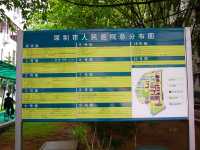 Directory of Peoples Hospital
 |
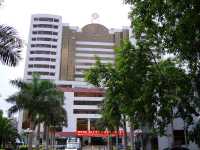 ShenzhenPeoplesHospital
 |
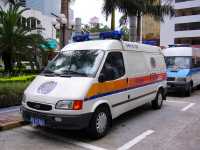 Ambulance Car of Peoples Hospital
 |
I visited Shenzhen People’s Hospital, which is
also the 2nd affiliated hospital of Jinan Medical University at
8:00 AM. This hospital is the largest hospital in Shenzhen. In
front of the entrance, there was an ambulance car waiting. They
arranged 9 ad-hoc cases for me. I did PCI in 4 of them. The other
5 patients were normal or did not need PCI. I did a transradial
stenting for 1 patient. The X-ray machine was a Siemens’s digitalized
one.
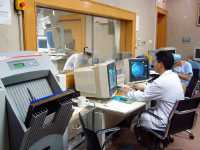
Catheter Laboratory in PeoplesHospital |
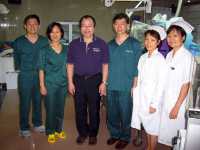
Everybody in PeoplesHospital |
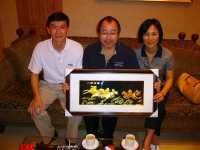
Professor Dong and Dr Luo |
Everybody in the catheter laboratory was very
friendly under the leadership by Professor Dong Shaohong. Shaohong
is a good name for ladies. It means “Little Deep Red””. I met
her in BeijingMedicalUniversityHospital in 1991, when first I
visited Beijing to do PCI. She was No. 2 physician under Professor
Zhu Guoren. She was already a skillful and knowledgeable Interventional
Cardiologist. She went to Israel for 1 year to study Interventional
Cardiology further and afterward studied in ChonnamUniversity,
Gwangju, Korea under Professor
Jeong Myng-Ho for 3 months. She is a beautiful and very charming
lady doctor, and can speak very beautiful English. Her husband
strongly wished to move this new city Shenzhen from Beijing around
1993. Professor Zhu was strongly against this idea, although she
finally agreed. Then Professor Dong moved to People’s Hospital
and established the most active catheter laboratory there. Dr.
Luo is a student of Professor Dong . He studied in OsakaCityUniversityHospital
for 2 years, so that he can speak fluent Japanese. I like this
team. It is something like a good family.
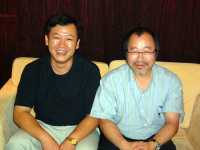
Mr Li in Shenzhen |
In the nighttime, we had a dinner together. We
discussed about many things each other. One of my Chinese friends,
Mr. Li, whom I met first at that time, can speak not so fluent
but enough English for mutual understanding. He used to work in
a bank. Now, he is working in this field. I asked him how he studied
English speaking. His answer was very interesting. Several years
ago, he traveled together with a famous Interventional Cardiologist
from Israel for 1 month from Shenzhen, Chongqing, and Urumqi to
Tibet. Only communication way with this Israel doctor was English.
First, he could not speak English much. However, while he was
traveling with the doctor, his communication ability in English
had much improved. I respect him. Based on Mr. Li’s information,
the divorce rate in Shenzhen is almost 50%. The reasons why the
divorce rate is so high are: First, the couples in Shenzhen are
young, since Shenzhen is a young city. Second, the proportion
of sex is extremely deviated to female. The ratio between male
and female in Shenzhen is 1 to 7, since many young ladies come
to Shenzhen to find jobs from local areas.
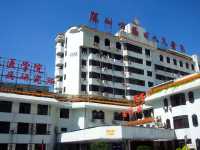 FutianHospital
 |
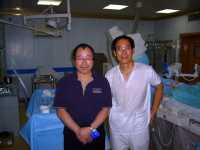 Dr Hu in FutianHospital
 |
 Shenzhen Railway Station
 |
July 14 Wednesday, 2004
I visited ShenzhenFutianHospital, which is one
of the affiliated hospitals of GuangdongMedicalCollege. I was
confused when I found the same “People’s” in the signboard of
the hospital. I asked Mr. Li what the meaning of “People’s” was.
I do not have any clear idea yet. But, his answer was something
like “national public”. Chinese Government owns the real estate,
building of the People’s hospitals. Everybody working in the hospital
is essentially a government employee. However, the equipments
or part of salaries can be decided within each hospital according
to the profits which each hospital could achieve. Thus, it is
like an independent administrative corporation. Dr. Hu Xuesong
in FutianHospital studied in AkitaKumiaiHospital for 1 year, and
can speak very fluent Japanese. I did one PCI among the 4 ad-hoc
cases. For 1 case, I did transradial diagnostic coronary angiography.
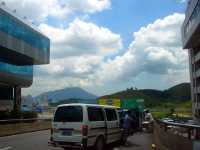
Hong Kong Side Hill |
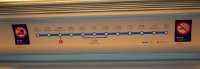
KCR Stations |
After finishing those 4 cases by 11:00 AM, I hurried
to Shenzhen Railway Station . From that station, we can take a
KCR train going to Hong Kong across the border. The half part
of the station building is actually in Hong Kong side. We can
see the hills in the Hong Kong side over the barricade wall from
the station in the Shenzhen side. KCR is “Kowloon-Canton Railway.
As you can see in the map, Hong Kong consists of several islands
and the peninsula. The biggest island is LantaoIsland, where is
the Hong KongInternationalAirport. The 2nd biggest island is the
center of Hong Kong, Hong KongIsland. The island side of the peninsula
is called Kowloon, which means 9 dragons in Cantonese. Thus, the
symbol of Hong Kong is the dragon. The name of an international
airline company based in Hong Kong is a good example. The name
is “Dragon Airline”.
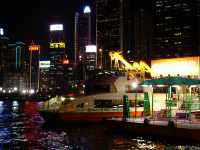
Dragon Boat Cruise |
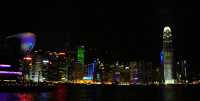
Night Scenery of Hong Kong Island |
It was surprising that the passport control in
the Chinese side was very quick instead of the slow process in
the Hong Kong side. It took about 30 minutes to pass 12 stations
from Lowu Shenzhen Station to the final destination, Hungham Station
in Kowloon.
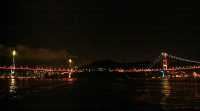
Bridge to Airport |
That night, I took a boat cruise. The Dragon Boat
departed at 8:00 PM from a wharf near the Hong KongInternationalConvention
Center. I could see beautiful night scenery of Hong KongIsland
. The boat passed under the bridge between Hong KongIsland and
LantaoIsland in 2 hours’ cruise . I enjoyed the spectacularly
beautiful scenery much. Next day, I flied back to Japan.
中国訪問記-VII
湘南鎌倉総合病院 心臓センター循環器科
齋藤 滋
Hong Kong Map |
Chinalink |
Shenzhen Bus Terminal |
はじめに 2004年7月12日月曜日朝9時50分成田発香港国際空港行きのJL731便に乗って中国深セン市(Shenzhen)に向かいました。中国政府はかれこれ20年以上前、実際には1979年のことですが、珠海市(Zhuhai),
厦門市(Xiamen), 汕頭市(Shantou)と並んでこの深セン市を経済特区として外国資本に解放しました。これ以前の深セン辺りの人口は3万人もいなかったそうですが、今では700万人以上の人口です。深センは香港の隣です。この二つの市の間には小さい川が流れています。中国と英国領香港の間の国境は、何年間も最も厳しい国境でした。香港は1997年7月1日に英国から中国に返還されましたが、今でも中国との間には境界があります。
Shenzhen Skyscrapers at Night |
Shenzhen Skyscrapers in the Daytime |
Traffic Jam in Shenzhen |
深センは今や広州を省都とする広東省において2番目に大きな都市です。多くの外国大企業がこの地域に進出しています。今回の深セン訪問は私にとって3回目でした。最初に訪れたのは1999年頃だったと思いますが、香港から汽車で移動しました。当時、香港から中国に渡る時にはとても長い行列が出入国ゲートに出来ていました。2回目はマカオから船で蛇口(Shekou)に入りました。蛇口から深セン中心部には車で、15分ぐらいで着きます。中国語で、深センも蛇口も漢字2文字から成ります。「深」は深い、という意味です。センは2つの部分から出来ています。左側は土という意味で、右側は川という意味です。従って、深センとは「深い泥川」という意味です。
今回は、香港国際空港から深センにバスを用いて移動しました。このバスの名前は”環島大陸通”というものです。この空港から深センに移動するにはこのバスを使うのが最も便利ですが、ほとんどの人は香港中心部から汽車で移動します。深センと香港のことを良く分かっている数少ない人々のみがこのバスを用います。バス料金はたった150香港ドル、即ち18米ドル程度です。バスはマイクロバスでした。私の他に台湾の人1人、日本人2人、そして韓国の人1人が乗り合わせました。国境の通過はものすごく簡単で、30分程度で深センのバス・ターミナルに到着しました。
深センは大きな都市です。そこには摩天楼がたくさんあります。通りは広いのですが、何しろ交通量増加がすごいので十分ではありません。
2004年7月13日火曜日
Directory of Peoples Hospital |
ShenzhenPeoplesHospital |
Ambulance Car of Peoples Hospital |
この日は朝8時に、Jinan大学第2付属病院である深セン人民病院を訪れました。この病院は深セン市最大の病院です。入り口前には救急車が待っていました。ここでは9例のアド・ホック症例が待っていましたが、その中の4例でPCIを行いました。それ以外の5例では正常冠動脈かあるいはPCIの必要が無いものでした。1例の患者さんに対しては経橈骨動脈的冠動脈インターベンションでステント植え込みを行いました。レントゲン機械はシーメンス社のデジタルでした。Dong
Shaohong教授に率いられているカテラボの皆はとても親切でした。
Catheter Laboratory in PeoplesHospital |
Everybody in PeoplesHospital |
Professor Dong and Dr Luo |
Shaohongというのは女性としてとても良い名前です。それは”少ない紅”という意味です。彼女とは、私が初めて北京をPCIのために訪れた1991年に北京医科大学病院で会いました。当時彼女は朱教授の下のNo.2でした。彼女は既に腕の良い、知識もきちんとあるPCI術者でした。彼女は1年間イスラエルに留学し、その後、韓国光州市にある慶南大学病院で丁教授の下で3ヶ月間勉強しました。1993年頃のことですが、彼女のご主人は北京から深セン市に移ることを強く希望されました。朱教授は強く反対したのですが、結局は賛成せざるを得なかったのです。そして、Dong教授はこの人民病院に移動し、深セン市最大のPCI部門を設立したのです。Luo先生はDong先生の弟子です。彼は大阪市立大学に2年間留学されたので日本語が上手です。私はこのチームをとても気に入りました。何だかとても良い家族のようです。
Mr Li in Shenzhen |
夜、私たちは夕食をとりました。互いにたくさんのことを話しました。中国の友人の1人、李さんとはこの時初めてお会いしました。彼は、決して上手ではありませんが、互いに理解しあうには十分な英語を喋ります。彼は、以前銀行に勤めていたのですが、現在はこの分野で働いています。彼にどうやって英会話を学んだかを尋ねました。彼の答えはとても興味深いものでした。数年間、彼は有名なイスラエルのPCI術者と一ヶ月間に渡って深セン、重慶、ウルムチそしてチベットを旅行したそうです。このイスラエル医師との唯一の意思伝達手段は英語のみでした。最初、彼は英語をそんなに喋ることができませんでした。しかし、この医師と旅行する間に英語での会話はずいぶんと上達したのです。私は彼のことを尊敬します。李さんの情報によれば、深センでの離婚率は何と50%近いということです。そんなに離婚率が高い原因として、第1には深セン市自体が若い都市なので、カップルも若い、ということです。第2の理由としては、男女比が著しく女性優位となっているからです。深センでは男女比が1:7だということです。多くの若い女性が職場を求めて地方から出てくるそうです。
FutianHospital |
Dr Hu in FutianHospital |
Shenzhen Railway Station |
2004年7月14日水曜日
広東医科大学付属深セン福田病院を訪れました。ここでも病院の看板に「人民病院」というのを見つけて分からなくなりました。李さんに「人民」の意味を聞きました。今でも明白には理解できていないのですが、概ね次のような理解で良いと思います。人民病院の土地・建物は中国政府に所属する。従って、この病院職員全員は国家公務員ということになります。しかし、設備や給与の一部は、それぞれの病院の利益に応じて決定できるのです。従って、独立行政法人というものと同じ、と考えれば良いでしょう。福田病院のHu
Xuesong先生は秋田組合病院に1年間留学され、とても上手な日本語を喋ります。この病院では4例のアド・ホック症例があり、中の1例でPCIを行い、1例で経橈骨動脈冠動脈造影を行いました。
Hong Kong Side Hill |
KCR Stations |
午前11時には4例を終え、私は深セン駅に向かいました。この駅から私たちは、国境を越えて香港に行くKCR汽車に乗りました。この駅の半分は実は香港側にあります。深セン側の駅からは香港側にある丘がバリケード越しに見えます。KCRとは「九龍-広東鉄道:
Kowloon-Canton Railway」の略です。地図で分かるように、香港はいくつかの島々と半島から成り立っています。最大の島はランタオ島で、ここには香港国際空港があります。2番目に大きな島が香港の中心、香港島です。半島の島側はKowloonと呼ばれています。これは広東語で九つの龍という意味です。従って、香港のシンボルは龍です。香港にある国際航空会社の名前が良い例です。それは、”Dragon
Airline”です。
Dragon Boat Cruise |
Night Scenery of Hong Kong Island |
中国側の出国審査はとてもすばやかったのですが、香港側の入国審査が遅いのにはびっくりしました。深センのLowu駅から九龍側から12の駅を30分ぐらいかけて最終駅Hungham駅に到着しました。
Bridge to Airport |
その夜、私は周航船に乗りました。ドラゴン・ボートは香港国際会議場近くの波止場から午後8時に出発しました。香港島の美しい夜景を見ることが出来ました。船は香港島からランタオ島にかかる橋の下を2時間かけて通りました。美しい絶景を楽しみました。翌日、日本に帰りました。
|


